
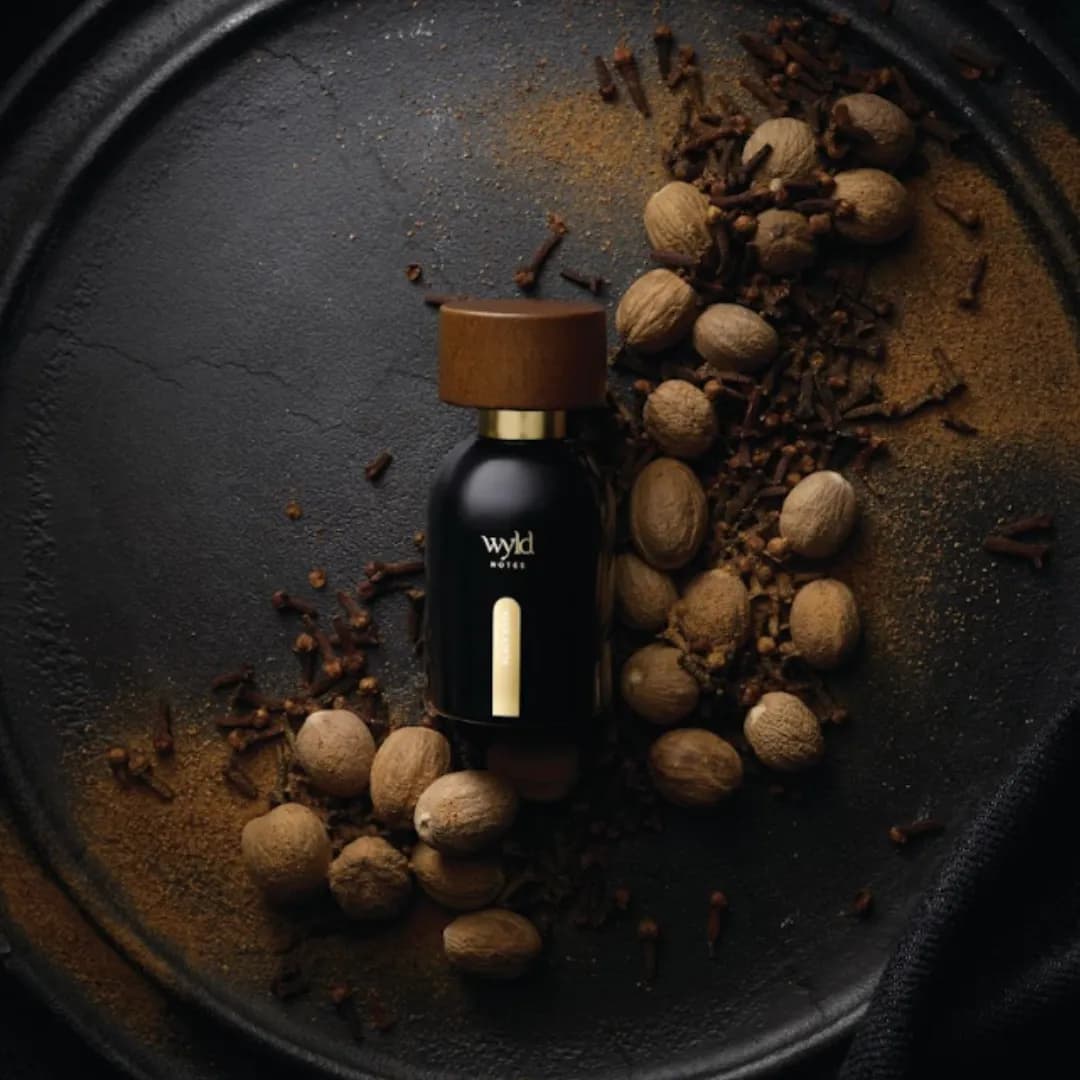
Why conventional fragrances last longer
Modern perfumery solved the longevity problem chemically: synthetic musks, stable amber molecules and fixatives are large, heavy and evaporate extremely slowly — some cling to clothing for days. In many conventional fragrances they form the foundation everything else stands on.
Essential oils, by contrast, are natural blends of comparatively light, volatile molecules. They rise faster — that is what makes their lively character, and what makes them fleeting. Both have the same cause; you do not get one without the other.
What nature offers as fixatives
Natural perfumery is not defenceless. There are natural materials that evaporate slowly and anchor a fragrance: resins like olibanum and benzoin, woods like sandalwood and cedar, plus patchouli, vetiver and the tonka bean. Read the pyramid of a natural perfume and you will find the answer to the longevity question in its base: the richer it is in resins and woods, the longer the fragrance carries.
Clary sage plays a quiet part here too — its constituent sclareol belongs to the materials from which perfumery developed its amber bases.
What that means for you in practice
First: adjust expectations. A natural perfume is not an endurance athlete but a companion for some hours — reapplying is not a design flaw but part of the ritual. Many decant a small atomiser for the road.
Second: read the base. If longevity matters to you, choose fragrances whose pyramid works with resins, woods, patchouli, vetiver or tonka at the bottom — and do not expect from a purely citrus fragrance what it physically cannot deliver.
Third: placement counts. On well-moisturised skin, fragrances last longer than on dry skin; on clothing they last longest, but develop differently there and can leave marks on delicate fabric — test on a hidden spot first.
What Wyld Notes itself says
For its own fragrances, the brand gives at least four to six hours on the skin as a guide — varying by person, skin moisture and dosage (manufacturer’s statement, as of August 2026). The product pages themselves stay more general: a heart that lingers for a few hours and a base that carries longer. Both fit what the pyramids show — patchouli, vetiver, tonka and olibanum at the bottom, exactly the natural anchors from the section above.
We repeat this figure as the brand states it. We have not measured it, and we will not do so before our own bottles are here.
Why this very thing convinces many
You can read the shorter life as a flaw. You can also read it as a feature: a fragrance that leaves after some hours allows another one in the evening. One that stays close to the skin belongs to you, not to the whole room. Those coming from loud long-distance runners often feel it as a loss first — and then as a relief.
What remains honest: how long a single fragrance lasts on your skin is something we cannot tell you — it depends on skin, weather and dosage, and our own wearing experience with the Wyld Notes fragrances will only begin once the bottles are here. What we can tell you is written in the pyramids — and we lay those out openly.